A mid-century modern living room, tried on your own room.
Mid-century modern comes from American and Scandinavian furniture of roughly the 1940s to the 1960s. It is easy to recognize and easy to overdo, so it helps to see how much of it your own living room can take.
Updated
Short answer
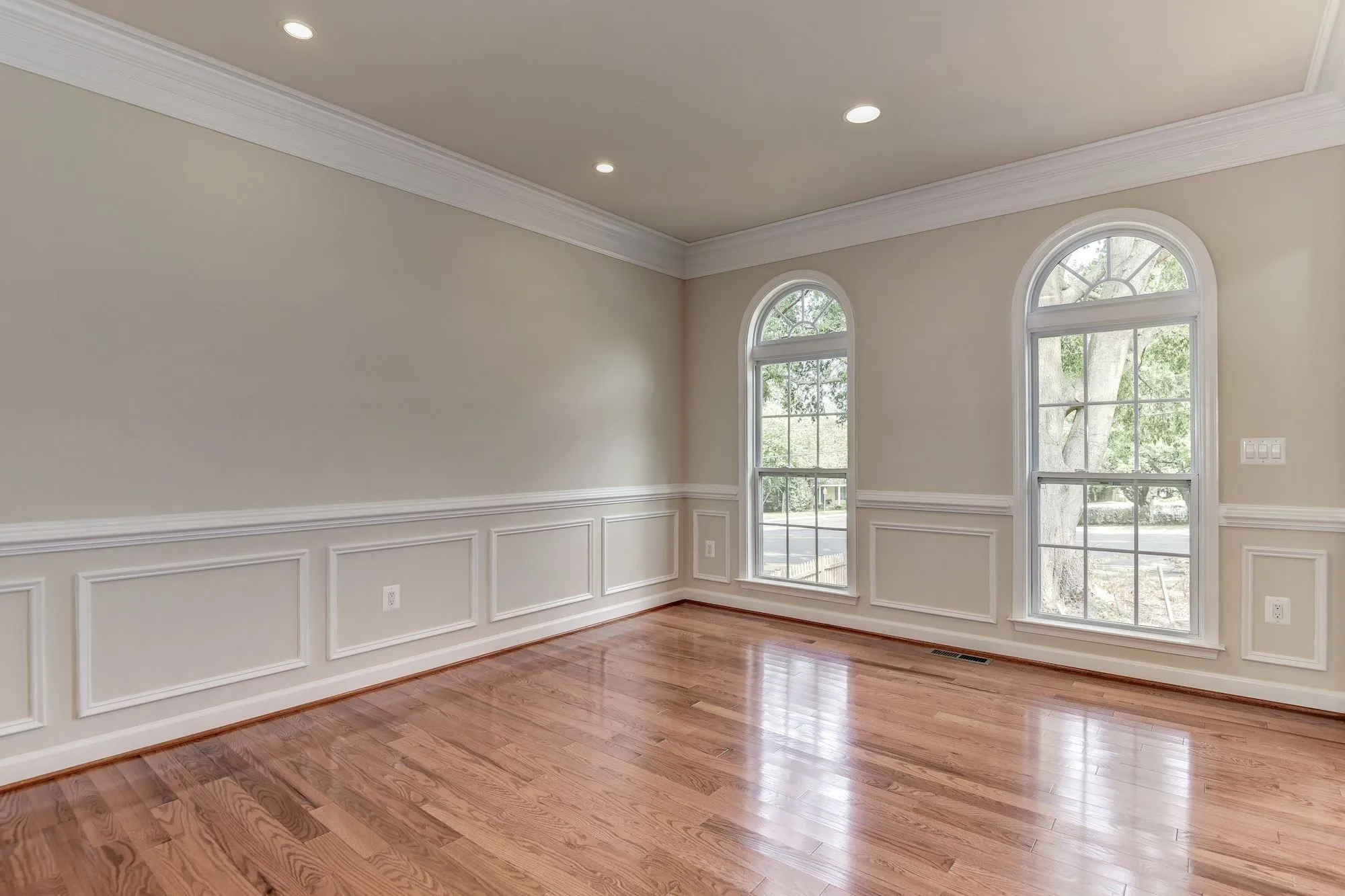
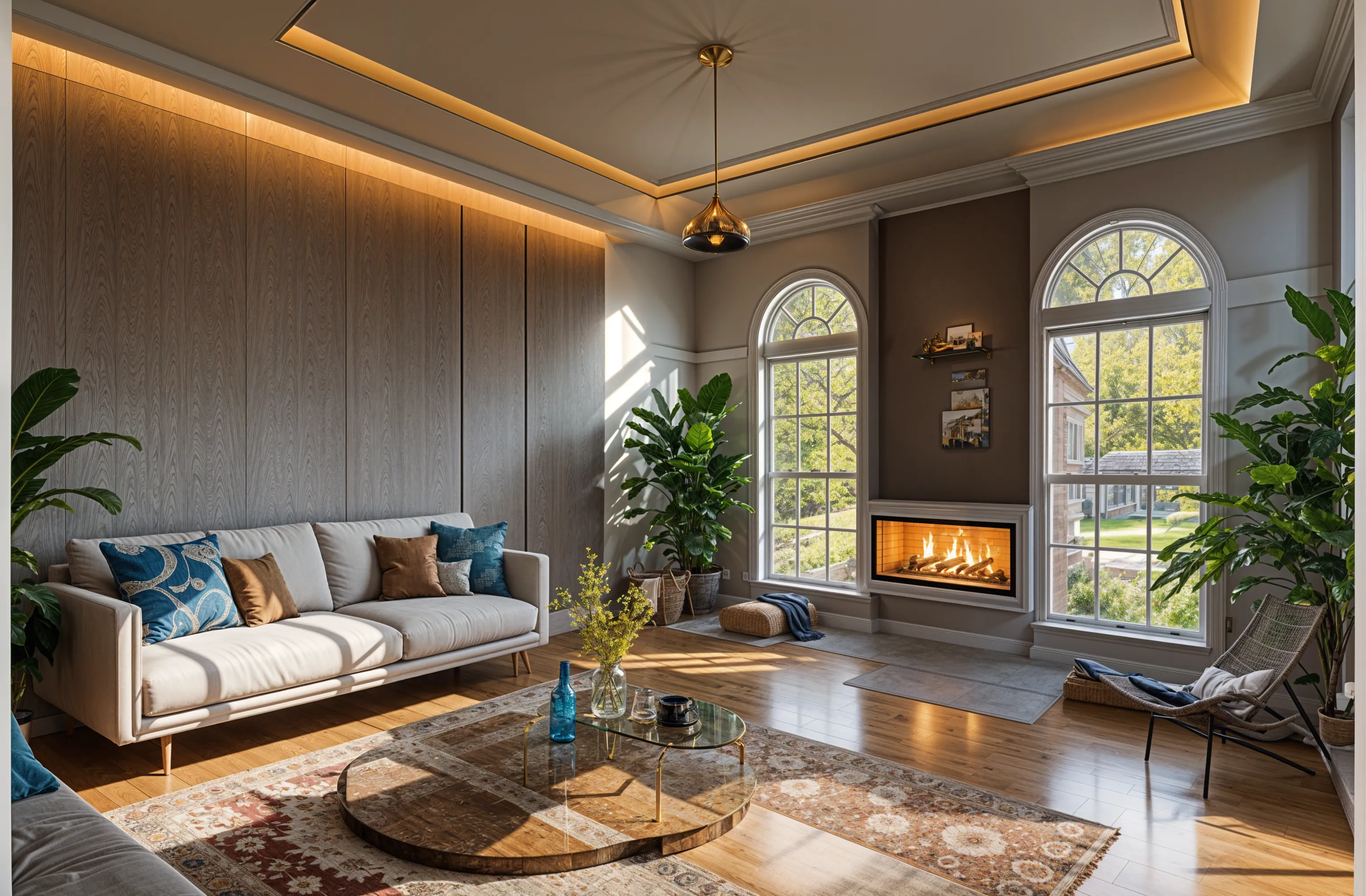
A mid-century modern living room is built on warm wood such as walnut or teak, low furniture with tapered legs, and a restrained palette lifted by one or two strong colors. To see it on your own living room, upload a photo to Remodeled AI and choose the Living room room type and the Mid-Century Modern style. On the web, both are included with a free account, with starter credits and no card.
What makes a mid-century modern living room
- Warm wood. Walnut and teak in the furniture, and sometimes on one wall as paneling.
- Low furniture on legs. Sofas, sideboards and chairs sit on slim tapered legs, which shows more floor and makes a room feel larger.
- Clean shapes. Straight lines mixed with gentle curves: a round coffee table, a shell chair, a globe or cone pendant.
- Color in small doses. Mustard, burnt orange, olive or teal in cushions, a chair or art, against white, grey or wood.
- A link to outdoors. Large plants and uncovered windows. The original houses were designed to open onto the garden.
What to check on your own living room
A photo of someone else’s living room can’t tell you how the style sits with your light, your proportions and the things you are keeping. These are the points to look at once it is on your photo:
- Your wood tones. Walnut furniture on a red or orange floor can clash. See whether a rug between them fixes it.
- Ceiling height. Low furniture suits low ceilings well. In a tall room, check that the furniture doesn’t look lost.
- How much is enough. One paneled wall or one statement chair often reads better than a full period set. Compare a lighter and a heavier version.
Where it works, and where it doesn’t
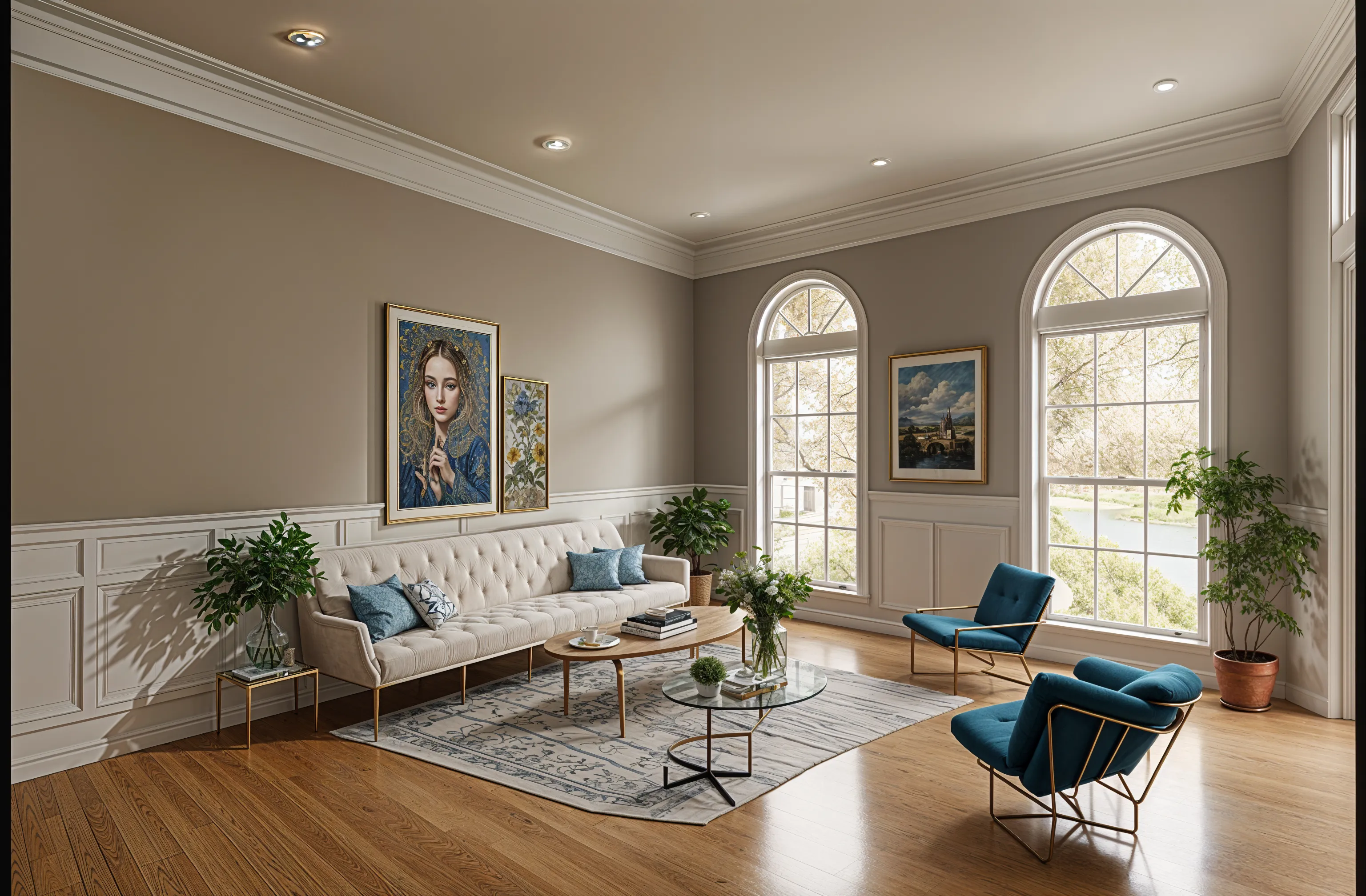
It suits houses from the 1950s to the 1970s, open-plan rooms, and rooms with large windows or low ceilings. It also mixes well: a sideboard and a pair of chairs sit comfortably with a plain modern sofa.
It is a poor match for rooms with heavy traditional detail, such as deep crown molding or an ornate fireplace, where the furniture can look out of place. Original pieces are also expensive, so decide how much of the look you need before you shop.
How to see it on your own living room
- Photograph the room. Stand in a doorway or a corner in daylight and use your phone’s normal 1x lens, so the seating, the main window and some floor are all in frame.
- Choose the room and the style. In Remodel, pick Living room as the room and Mid-Century Modern as the style. Remodel is designed to keep the shape of the space and its windows and to change the finishes around them.
- Run a second style on the same photo. Try Scandinavian next and drag the slider on each. A style is easier to judge beside another one than on its own.
- Refine the one you keep. On a paid plan, Edit changes one thing you describe and Brush changes only the area you paint over. Designs are saved in your Library beside the original photo.
Styles to compare it with
- Scandinavian. Paler wood, whiter walls and softer textiles.
- Contemporary. Similar clean lines with current materials and a cooler palette.
- Japandi. Lower, quieter and more natural, with less color.
What a design can’t tell you
A design is a picture of a direction. It has no measurements, so it can’t tell you whether a sofa that size fits the wall or clears the door. The furniture in it is a look to match, not specific products, and a design can add things that aren’t in your room, such as a fireplace or a different view out of the window. Treat those as ideas.
What it costs
On the web, the Living room room type and the Mid-Century Modern style are both included with a free account, which comes with starter credits and needs no card. Every paid plan adds Edit and Brush and unlocks all the styles and room types. The pricing page lists what each plan includes.
Common questions
- What colors are mid-century modern?
- A base of white, warm grey and wood, with accents of mustard, burnt orange, olive green, teal or brown. Most rooms use one or two accents, not all of them.
- Does mid-century modern work in a small living room?
- Yes. Furniture on legs and low backs keeps sight lines open, which helps a small room. Keep the number of pieces down and let one of them be the feature.
- Can I mix mid-century modern with what I already own?
- Usually. Try the style on a photo of the room as it is. On a paid plan, Edit then changes one piece at a time, so you can see which swaps do the most.
- Is the Mid-Century Modern style free to try on a living room?
- Yes. On the web, a free account includes the Living room room type and the Mid-Century Modern style, with starter credits and no card. Paid plans start with Basic at $13 a month, or $91 a year and add Edit and Brush for changing one thing at a time. The pricing page lists what each plan includes.
See your living room in the Mid-Century Modern style
Upload a photo, pick the style, and compare it with what you have now.
Redesign my living room