A transitional house exterior, tried on your own house.
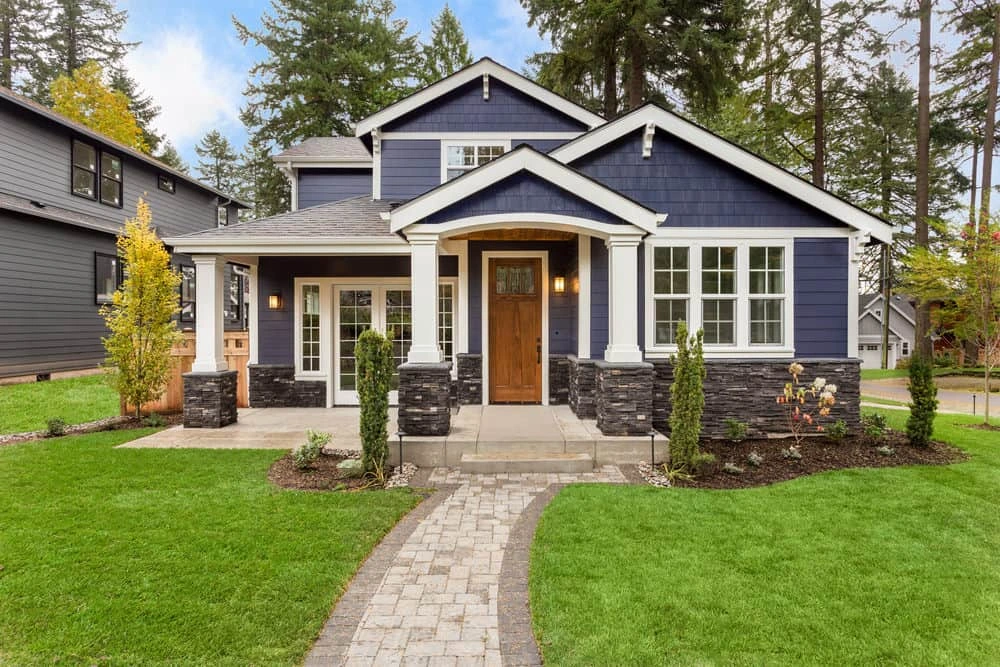
Transitional sits between traditional and contemporary: the house keeps its classic shape, porch and rooflines, but the colors get deeper, the trim gets simpler and the planting gets tidier. It is the look to test when you want a house to feel current without looking like a new build.
Updated
Short answer
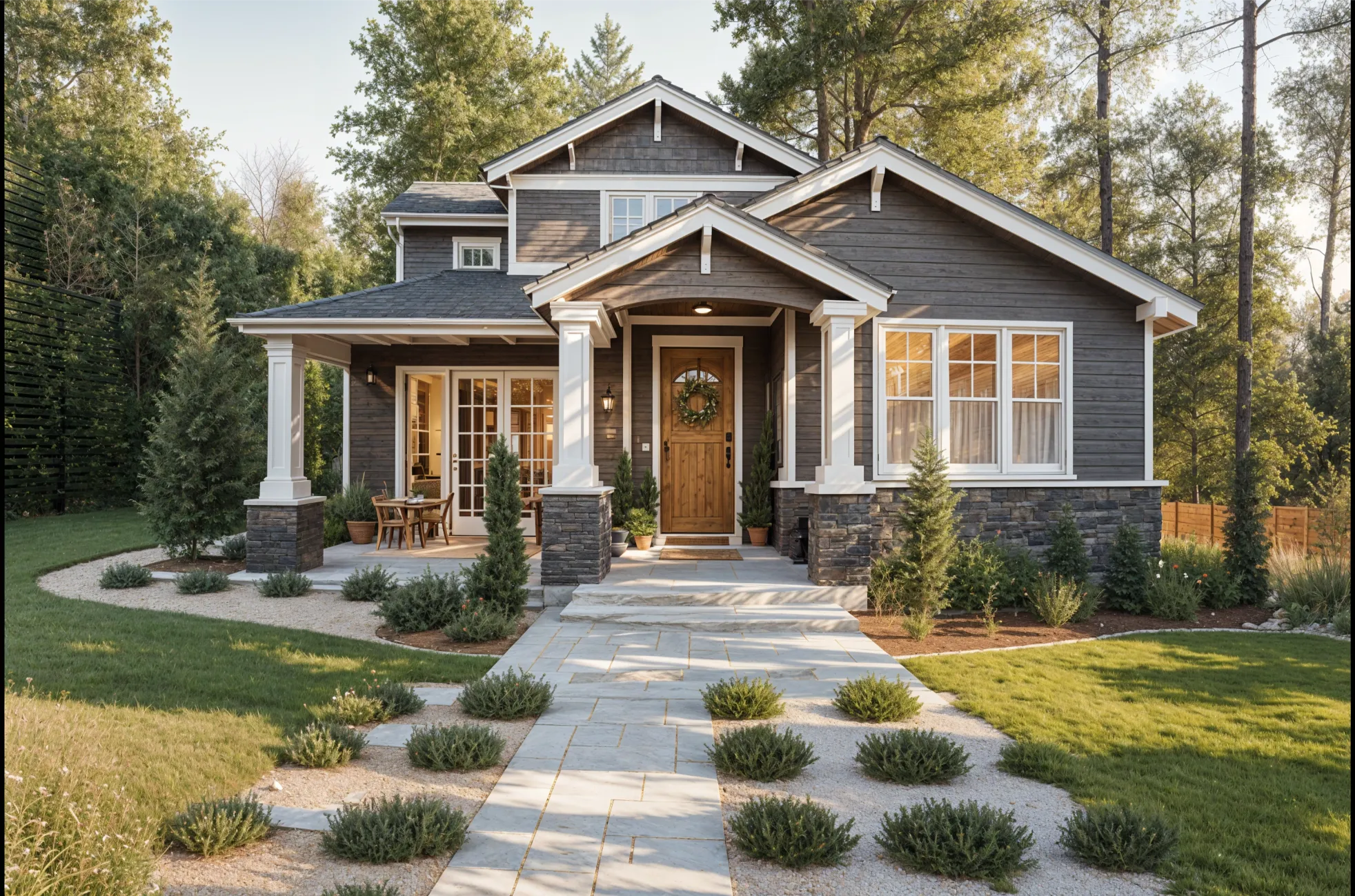
A transitional house exterior keeps a traditional shape but dresses it simply: dark or deep-toned siding such as charcoal, navy or deep green, crisp contrasting trim, plain lights and hardware, and neat, structured planting along the path. To see it on your own house, upload a photo to Remodeled AI and choose the House exterior room type and the Transitional style. On the web, house exteriors come with every paid plan, starting with Basic at $13 a month, or $91 a year.
What makes a transitional house exterior
- Deep, tailored siding. Charcoal, slate, navy or a dark green, usually one color across the main walls.
- Crisp trim. Window frames, fascia and posts in one contrasting color, with little decorative molding.
- The house’s own shape. Gables, a porch and existing stone or brick stay; the change is in color and finish.
- Simple lights and hardware. Plain wall lanterns or downlights, a solid front door and black or bronze hardware.
- Structured planting. Clipped shrubs, a planted border along the walk and a clear path to the door.
What to check on your own house
A photo of someone else’s house exterior can’t tell you how the style sits with your light, your proportions and the things you are keeping. These are the points to look at once it is on your photo:
- Your roof color. A dark roof with dark siding can read as one heavy block. Compare the design with a slightly lighter wall color if your roof is black or dark brown.
- Stone and brick. Warm stone or red brick sits differently next to charcoal than next to white. See whether the design keeps yours and whether you like the pairing.
- Sun and heat. Dark siding absorbs heat and can fade faster on a sunny wall. A designer or paint supplier can suggest a finish suited to your climate.
Where it works, and where it doesn’t
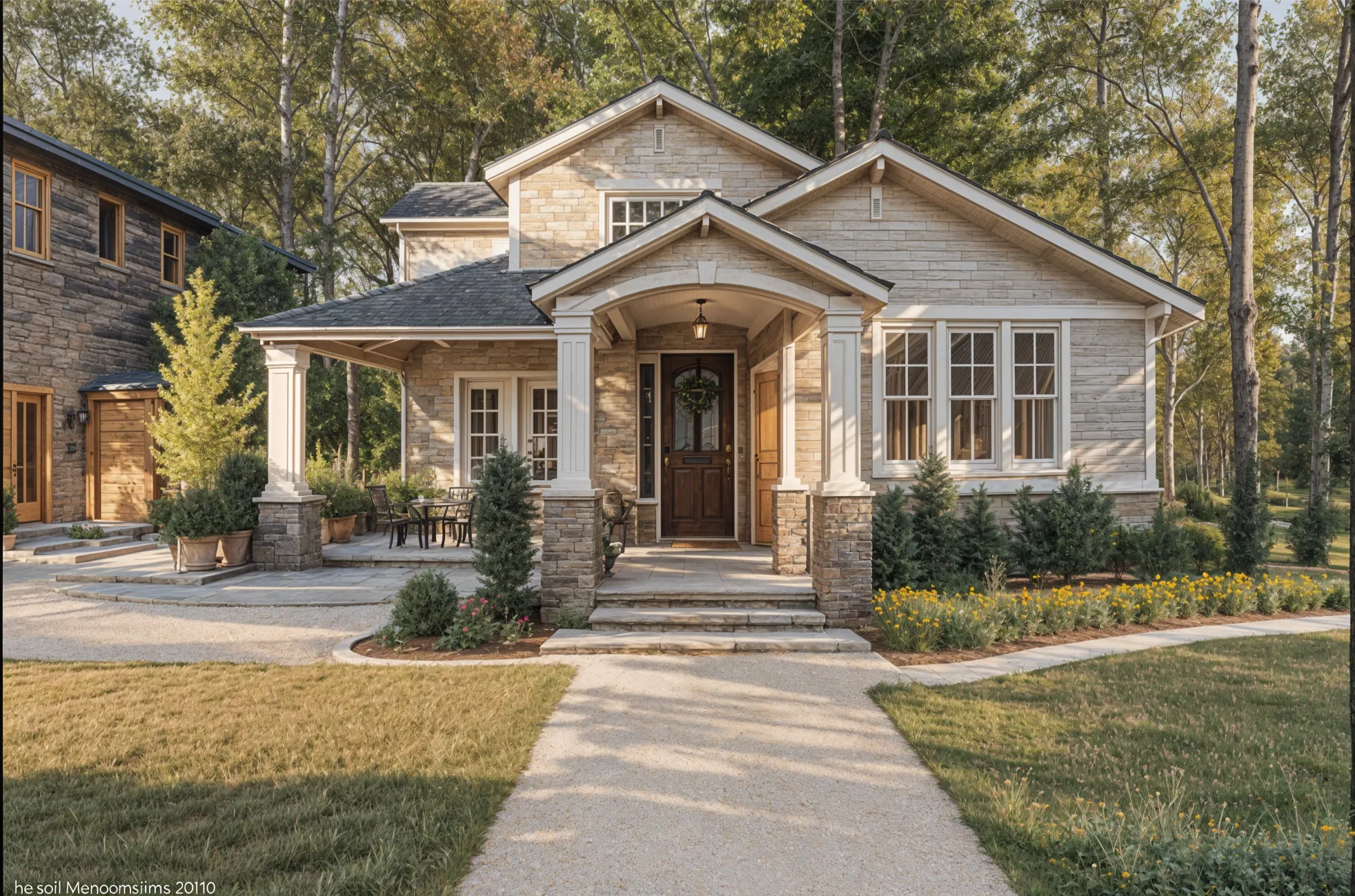
It suits traditional houses that feel dated rather than badly shaped: craftsman bungalows, colonials, ranch houses and newer suburban homes. Much of the look can come from paint, trim color, lights and planting before any siding is replaced.
It suits very small cottages or houses in strongly colorful streets less well, where a dark scheme can feel heavy. A mid-grey version of the same look is a gentler step.
How to see it on your own house
- Photograph the front of the house. Stand across the street or at the end of the drive on an overcast day or with the sun behind you, and get the whole front and the roofline in frame.
- Choose the room and the style. In Remodel, pick House exterior as the room and Transitional as the style. Remodel is designed to keep the shape of the space and its windows and to change the finishes around them.
- Run a second style on the same photo. Try Farmhouse next and drag the slider on each. A style is easier to judge beside another one than on its own.
- Refine the one you keep. On a paid plan, Edit changes one thing you describe, or only the area you paint over. Designs are saved in your Library beside the original photo.
Styles to compare it with
- Farmhouse. The light version: pale siding, dark frames and wood details. This one is included with a free account.
- Contemporary. More materials and less tradition: wood cladding, stone and path lighting. This one is included with a free account.
What a design can’t tell you
An exterior design is a concept, not construction drawings. It can’t tell you what siding, paint or planting costs, what your climate or a homeowners’ association allows, or whether a porch or window change is structurally possible. A design can also add things that aren’t there, such as paving or planting. Treat those as ideas to price, not as a plan.
What it costs
On the web, house exteriors come with every paid plan, starting with Basic at $13 a month, or $91 a year. A free account covers living rooms, bedrooms, bathrooms, kitchens, dining rooms and offices, so you can try a room first. Every paid plan adds Edit and unlocks all the styles and room types. The pricing page lists what each plan includes.
Common questions
- What colors are transitional house exteriors?
- Deep tones for the walls, such as charcoal, slate, navy or dark green, with crisp trim in white or black, and black or bronze lights and hardware.
- Can I get a transitional exterior with paint alone?
- Often most of it: painting the siding and trim, changing the lights and front door, and tidying the planting carry the look. A design on a photo of your house shows whether that is enough.
- How do I try it in Remodeled AI?
- Choose House exterior as the room type and Transitional as the style, then upload a photo of the front of your house. House exteriors need a paid plan.
- Is the Transitional style free to try on a house exterior?
- Not this one. On the web, house exteriors come with every paid plan, starting with Basic at $13 a month, or $91 a year. A free account, with starter credits and no card, covers living rooms, bedrooms, bathrooms, kitchens, dining rooms and offices. The pricing page lists what each plan includes.
See your house exterior in the Transitional style
Upload a photo, pick the style, and compare it with what you have now.
Redesign my exterior